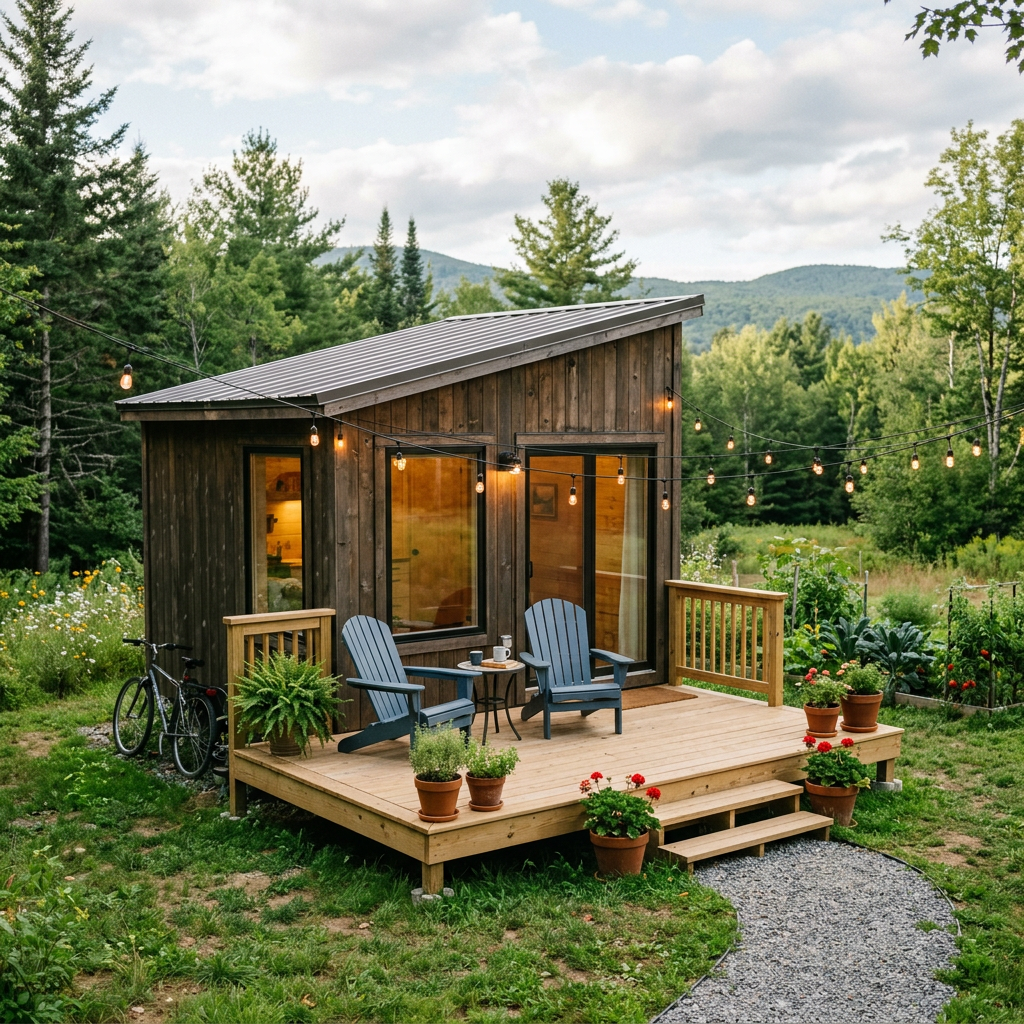
Buying a tiny home isn’t like buying a new sofa or even a traditional house. Every builder approaches tiny living differently, and the company that’s perfect for one buyer may be completely wrong for another.
Some builders specialize in luxury, fully customized homes with premium finishes. Others focus on affordable tiny houses on wheels that are ready for full-time travel. Still others have shifted toward modular homes and accessory dwelling units (ADUs) designed to remain on a permanent foundation.
That variety is exciting, but it can also make choosing a builder surprisingly difficult.
After researching dozens of companies, I found that the best builders tend to excel in different areas rather than competing to build the exact same product. That’s why this guide doesn’t rank companies from best to worst. Instead, it highlights builders that stand out for specific strengths, whether that’s exceptional craftsmanship, beautiful architectural design, flexible customization, or a straightforward buying experience.
What I Looked For
Every builder featured in this guide has an established reputation and offers something unique. While researching these companies, I considered factors such as:
- Reputation and years in business
- Construction quality
- Design and craftsmanship
- Customization options
- Tiny homes on wheels, park models, and modular home offerings
- Financing availability
- Delivery area
- Educational resources and customer support
- Overall value
Rather than searching for one “perfect” builder, I looked for companies that consistently deliver quality homes while serving different types of buyers.
Before You Choose a Builder
Before comparing floor plans or finishes, it’s worth answering a few questions about how you plan to use your tiny home.
Do you want a tiny home on wheels or a permanent home?
This is one of the most important decisions you’ll make.
A tiny home on wheels (THOW) is built on a trailer and is ideal for buyers who want mobility or plan to place the home in an RV-friendly community.
A park model is also built on a chassis but is intended for longer-term placement, often in RV parks or tiny home communities.
A modular home is delivered in sections and installed on a permanent foundation. Depending on local regulations, it may qualify as a traditional residence.
Understanding these differences early can save you a great deal of time during your search.
How much customization do you need?
Some builders allow you to modify an existing floor plan with different finishes, appliances, and layouts. Others will design a home completely from scratch.
If you already have a very specific vision, a custom builder like Tiny Heirloom or Tru Form Tiny may be worth the additional investment. If you’d rather choose from proven designs, companies like Tumbleweed or ESCAPE Homes may offer a simpler buying experience.
Think beyond the purchase price
The cost of the home is only one part of the equation.
You’ll also want to consider:
- Delivery costs
- Site preparation
- Foundation or parking requirements
- Utility connections
- Insurance
- Financing
- Local zoning regulations
These expenses can vary significantly depending on where you plan to place your home.
How to Use This Guide
Instead of declaring one builder the “best,” I’ve highlighted what each company does exceptionally well.
Some excel at luxury craftsmanship. Others focus on helping first-time buyers navigate the process. Some specialize in modular homes for permanent living, while others build beautifully designed tiny homes on wheels.
My goal is simple: by the time you finish reading, you should have a clear idea of which builder best matches your goals, budget, and lifestyle.
Let’s get started.
Tumbleweed Tiny House Company

If you’ve spent any time researching tiny homes, you’ve almost certainly come across Tumbleweed. Founded in 1999, the company helped popularize the modern tiny house movement and remains one of the best-known names in the industry. That experience gives buyers a level of confidence that newer builders simply haven’t had time to establish.
Rather than offering hundreds of different floor plans, Tumbleweed focuses on a handful of refined models—including the Elm, Cypress, Farallon, and Aspen—that can be customized to suit different lifestyles. The designs balance efficient layouts with classic styling, making them a good fit for buyers who want a move-in-ready home without starting from scratch.
One of Tumbleweed’s biggest strengths is its emphasis on RVIA-certified tiny homes. While the certification may not seem exciting at first glance, it can make a meaningful difference when it comes to financing, insurance, and parking options. For many first-time buyers, that added flexibility can remove some of the uncertainty that comes with purchasing a tiny home.
Tumbleweed also delivers throughout the United States and offers financing options, making it accessible to buyers who don’t live near one of its facilities.
Pros
- One of the most established names in the tiny house industry
- RVIA-certified homes
- Nationwide delivery
- Financing available
- Well-developed, proven floor plans
Cons
- Buyers looking for highly customized, architect-designed homes may prefer a boutique builder.
- Premium features and certifications can increase the overall price compared with some regional builders.
Best for: Buyers who want an established company, proven designs, and a straightforward path to financing and ownership.

Best for Luxury Custom Tiny Homes
If your vision of a tiny home includes premium finishes, thoughtful architecture, and a layout designed specifically around your lifestyle, Tiny Heirloom deserves a close look. Rather than competing on price, the company has built its reputation around craftsmanship, customization, and creating homes that feel every bit as refined as a full-sized custom residence.
One of Tiny Heirloom’s greatest strengths is flexibility. Buyers can choose from signature models, commission a fully custom design, or even purchase a pre-owned home. Their portfolio spans everything from contemporary mountain retreats and modern cottages to specialized commercial projects, illustrating that the company is comfortable designing for a wide range of needs instead of relying on a small collection of standard floor plans.
Tiny Heirloom has also expanded beyond residential homes. The company works with developers, resorts, employers, and businesses on modular housing, hospitality projects, workforce accommodations, and custom commercial units. While most readers will be shopping for a personal tiny home, this broader experience suggests a builder with substantial design and manufacturing capabilities.
The buying process reflects the company’s custom-first philosophy. Instead of simply selecting a model online, buyers begin with a consultation to discuss their goals, design preferences, budget, and timeline before moving into the planning and construction process.
Pros
- Exceptional level of customization
- High-end finishes and craftsmanship
- Strong portfolio of unique designs
- Residential and commercial expertise
- Design-focused consultation process
Cons
- Premium customization generally comes with a higher price than standard production builders.
- Buyers looking for a quick, off-the-shelf tiny home may find other builders offer a faster path.
Best for: Buyers who want a luxury tiny home designed around their specific lifestyle and are willing to invest in premium craftsmanship.
View current models on Tiny Heirloom’s website

Best for Permanent Tiny Living
If your goal is to own a tiny home that feels more like a traditional house than an RV, Mustard Seed Tiny Homes is one of the builders worth exploring. Based in Georgia, the company has increasingly focused on modular and park model homes designed for permanent or semi-permanent placement rather than highly mobile tiny homes on wheels.
One of Mustard Seed’s greatest strengths is its emphasis on helping buyers transition into full-time tiny living. Instead of simply selling a house, the company spends considerable time explaining where different types of tiny homes can be placed and how modular homes may simplify long-term ownership, depending on local zoning and building regulations. That practical approach can be especially valuable for first-time buyers who are still navigating the legal side of tiny living.
Mustard Seed offers several signature models—including the Dogwood, Harvest, and Sycamore—that can be customized with different finishes, layouts, and features. Many of the homes include amenities such as full-size kitchens, downstairs bedrooms, dedicated office space, and generous living areas, creating homes that feel comfortable for everyday life rather than occasional travel.
The company is also involved in developing a modular tiny home community in North Georgia, reflecting a broader vision of creating neighborhoods where tiny living can thrive.
Pros
- Strong focus on permanent housing solutions
- Modular and park model expertise
- Customizable standard floor plans
- Spacious layouts with “big house” amenities
- Helpful educational resources about placement and zoning
Cons
- Buyers specifically looking for a tiny home on wheels may need to consider another builder, since Mustard Seed has paused new THOW builds.
- Because these homes are designed for permanent living, they’re generally less suited to frequent relocation.
Best for
Homebuyers who want to simplify without giving up the comforts of a traditional house, especially those planning to place a tiny home on private land or use it as a long-term residence or rental.
View current models at Mustard Seed’s website

Best for Buyers Who Want More Than a Tiny House
If you’re open to something larger than a traditional tiny home, Zook Cabins is one of the most versatile builders on this list. Rather than focusing solely on homes under 400 square feet, the company offers an extensive lineup that includes park models, ADUs, modular homes, modern cabins, log cabins, and HUD-certified manufactured homes. That broad selection makes it easier to find a home that fits your lifestyle without feeling constrained by a single type of construction.
Founded in 2006, Zook Cabins began by building hunting cabins before expanding into a nationally recognized prefab housing company. Today, the company serves everyone from private homeowners to campground operators and resort developers, reflecting its experience with both residential and commercial projects.
One of Zook’s strengths is its emphasis on factory-built quality. Homes are constructed indoors and feature details such as 2×6 exterior walls, solid wood cabinetry, quality insulation, and branded windows and doors. The company argues that this controlled building environment improves quality while reducing construction delays caused by weather.
Another thing I appreciate is how transparent they are about the buying process. Their website walks prospective buyers through planning, choosing a model, delivery, and setup, making what can feel like a complex purchase much easier to understand.
Pros
- Wide variety of prefab housing options
- Strong emphasis on construction quality
- Suitable for primary homes, vacation cabins, rentals, and resorts
- Clear buying and delivery process
- Extensive catalog of floor plans
Cons
- Buyers specifically looking for a tiny home on wheels may find more specialized builders elsewhere.
- The broader product lineup can make it feel less focused on the tiny house lifestyle than companies dedicated exclusively to tiny homes.
Best for
Buyers who want the efficiency of factory-built construction but need more flexibility than a traditional tiny house offers, whether that’s a park model, an ADU, a vacation cabin, or a full-size modular home.

Best for High-End Modular Homes and Investment Properties
Wind River Built has grown well beyond its roots as a tiny house builder. Today, the company designs and constructs luxury park models, modular homes, ADUs, and hospitality units, helping everyone from first-time homeowners to resort developers find the right factory-built housing solution. If you’re looking for a builder that can scale from a backyard guest house to an entire cabin community, Wind River stands out from many of its competitors.
One of Wind River’s greatest strengths is education. Rather than assuming buyers already understand the differences between tiny homes, park models, and modular construction, the company provides detailed resources explaining zoning, financing, building codes, and long-term ownership. That guidance can make the buying process much less intimidating, especially for first-time purchasers.
The company was founded after CEO Travis Pyke built and lived in his own tiny home, and that personal experience still shapes Wind River’s philosophy of “right-sized living.” Today the business has expanded into a large manufacturing operation with a 100,000-square-foot facility and projects across dozens of states, reflecting its evolution from boutique builder to established prefab housing company.
Whether you’re buying a starter home, adding an ADU, downsizing, or developing short-term rental cabins, Wind River’s integrated design-build-deliver process provides a level of support that’s uncommon in the industry.
Pros
- Strong expertise in both modular homes and luxury park models
- Excellent educational resources about zoning, financing, and construction
- Turnkey design-build-deliver process
- Experienced with residential, hospitality, and investment projects
- Large, established manufacturing operation
Cons
- Buyers looking for a highly artistic, one-of-a-kind custom tiny home may prefer a boutique builder.
- The company’s growing focus on modular housing and commercial developments may feel broader than what some buyers expect from a traditional tiny house builder.
Best for
Homeowners and investors who want a professionally managed building process and are interested in high-quality modular homes, ADUs, luxury park models, or hospitality projects.

Best for Design-Focused Tiny Homes
If thoughtful design is just as important to you as square footage, Tru Form Tiny deserves a place near the top of your list. Based in Eugene, Oregon, the family-owned builder has earned a reputation for creating tiny homes that feel less like RVs and more like carefully designed modern residences. Every home emphasizes craftsmanship, natural materials, and timeless aesthetics without sacrificing the practicality required for full-time living.
Rather than overwhelming buyers with dozens of unrelated floor plans, Tru Form organizes its homes into distinctive design collections, including Urban and Craftsman styles, while still allowing extensive customization. Buyers can personalize an existing model or work with the design team to create a completely custom home tailored to their lifestyle. Whether you’re dreaming of a rooftop deck, unique storage solutions, or premium interior finishes, the company is equipped to build highly individualized homes.
Construction quality is another area where Tru Form stands out. Their RVIA-certified homes are built on custom DOT-approved trailers using kiln-dried lumber, structural subfloors, quality insulation, low-E double-pane windows, and durable standing-seam metal roofing. These aren’t simply decorative upgrades—they’re the kinds of construction details that can improve comfort, durability, and long-term performance.
The company’s roots also add to its appeal. Long before tiny homes became mainstream, co-owner Jon Carroll built a tiny home for his family while working in the forests of the Pacific Northwest. That experience eventually evolved into the business it is today, giving Tru Form a story that’s grounded in genuine experience rather than following a trend.
Pros
- Exceptional architectural design
- Premium construction materials
- RVIA-certified tiny homes
- Extensive customization options
- Family-owned with deep roots in tiny living
- Nationwide delivery
Cons
- Premium materials and craftsmanship generally place Tru Form in the higher end of the market.
- Buyers looking for a basic, budget-friendly tiny home may find more economical options elsewhere.
Best for
People who want a tiny home that feels intentionally designed, beautifully crafted, and built for long-term living—not simply a compact place to stay.
Check out Tru Form Tiny’s current line of models here

Best for Buyers Who Want Flexibility
If you’re still deciding whether a tiny home on wheels, a park model, or a modular home is the right fit, Mint Tiny House Company is one of the most versatile builders to consider. Since 2014, the British Columbia–based company has expanded into one of North America’s larger tiny home manufacturers, offering RV-certified tiny homes, park models, modular homes, and custom designs for customers throughout the United States and Canada.
One of Mint’s biggest strengths is helping buyers choose the right type of home before construction even begins. Rather than pushing a single product, the company explains the differences between RV-certified homes, park models, and modular construction so buyers can select an option that matches their property, local regulations, and long-term goals. That educational approach is especially valuable for first-time buyers navigating zoning and placement requirements.
Mint also offers an organized, transparent buying process. Customers begin with a discovery consultation before selecting a layout, exploring financing options, finalizing customizations, preparing their site, and scheduling delivery. The company remains involved through installation and follow-up, creating a streamlined experience from start to finish.
Because the homes are designed for customers across both Canada and the northern United States, Mint places a strong emphasis on insulation and cold-weather performance. Buyers in colder climates may appreciate the available winter-focused upgrades and guidance for year-round living.
Pros
- Offers RV-certified tiny homes, park models, and modular homes
- Strong educational resources for choosing the right home type
- Clear, step-by-step buying process
- Extensive customization options
- Cold-climate expertise
- Delivery throughout the U.S. and Canada
Cons
- Buyers seeking a highly architectural, one-of-a-kind luxury home may prefer a design-focused boutique builder.
- The broad product lineup can make the initial decision process feel more complex than companies with just a few standard models.
Best for
Buyers who want guidance as much as they want a home—especially those comparing different types of factory-built housing and looking for a builder that can adapt to a wide range of needs.
See their full line of models here
Final Thoughts
Finding the right tiny house builder isn’t about choosing the company with the biggest name or the longest list of features. It’s about finding the builder whose strengths match your goals.
If you dream of a fully customized luxury home, a company like Tiny Heirloom or Tru Form Tiny may be worth the investment. If you’re looking for a proven, straightforward buying experience, Tumbleweed remains one of the industry’s most established names. Buyers interested in permanent modular living, investment properties, or flexible factory-built housing have excellent options as well.
Before making a decision, take time to compare floor plans, ask questions about financing and warranties, understand local zoning requirements, and speak directly with the builders you’re considering. A tiny home is a significant investment, and the best companies are happy to help you determine whether they’re the right fit.
As I continue researching the tiny house industry, I’ll be publishing more in-depth guides covering financing, RVIA certification, zoning, modular homes, park models, and other topics that can make the buying process easier. My goal is to help you make an informed decision—so you can spend less time sorting through conflicting information and more time finding a home you’ll love.
No matter which builder you choose, I hope this guide has made your search a little simpler.
Leave a Reply